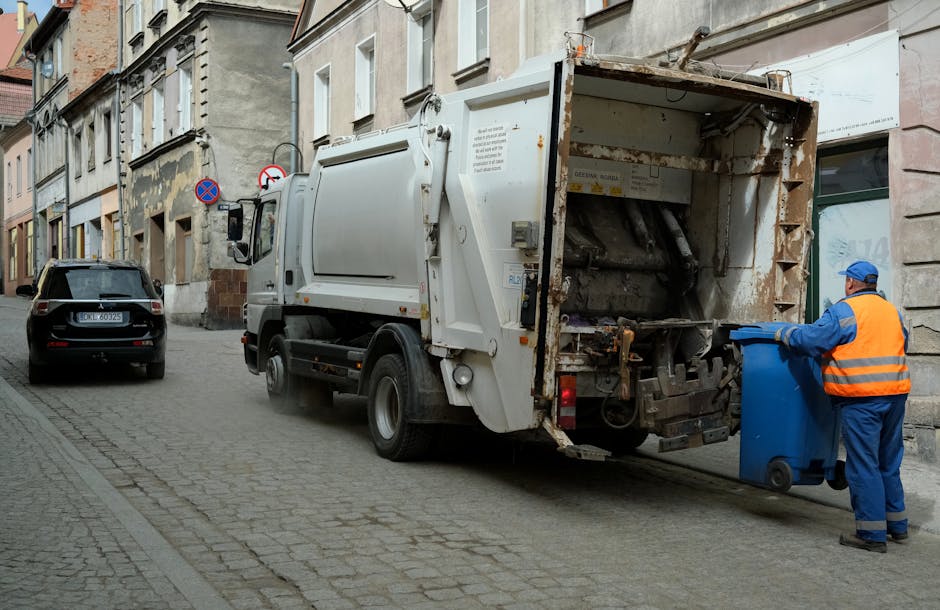
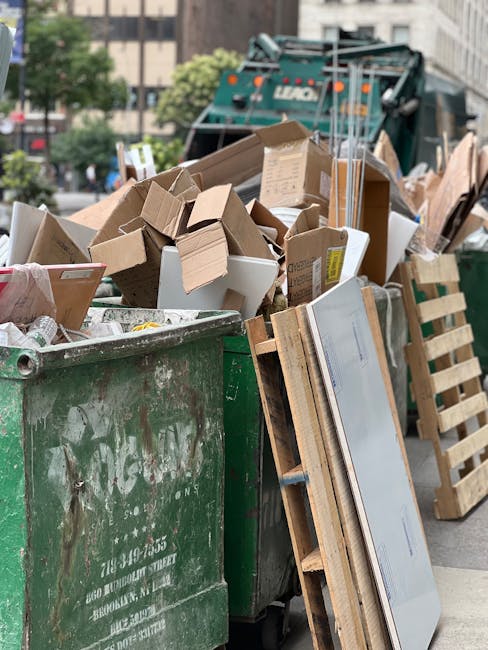
W1K bulky rubbish collection near Grosvenor Square Mayfair
If you live, work, or manage property around Grosvenor Square, you already know bulky rubbish is never just "stuff to get rid of". It can block narrow entrances, upset neighbours, create access problems, and turn a tidy Mayfair space into a nuisance fast. A proper W1K bulky rubbish collection near Grosvenor Square Mayfair service is about more than lifting heavy items. It is about doing it safely, discreetly, and in a way that fits the realities of central London living.
Whether you are clearing a single sofa, a mattress, broken office furniture, or a pile of mixed household items after a move, the right approach saves time and avoids stress. In this guide, we walk through how bulky rubbish collection works in W1K, what to expect, common mistakes, compliance concerns, and how to choose the best option for your situation. Let's make the whole thing feel a bit less of a headache.
Why W1K bulky rubbish collection near Grosvenor Square Mayfair Matters
W1K is a busy, high-value part of London, and Grosvenor Square sits right in the middle of a district where space is precious. Bulky waste is often awkward by nature: wardrobes, bed bases, old desks, filing cabinets, broken appliances, exercise equipment, and over-sized household items do not shift easily through lifts, stairwells, or tight hallways. If you leave it too long, it becomes more than clutter. It becomes a practical problem.
In central Mayfair, that problem can show up in several ways. Shared entrances may be obstructed. Porters or building managers may be unhappy. Residents might need to navigate around items for days. And if the waste is placed incorrectly, it can cause a poor impression in a neighbourhood where presentation really matters. To be fair, that is not unusual in London; what matters is dealing with it properly.
There is also the reality of mixed waste. One person's "bulky rubbish" can include reusable furniture, electrical items, and a few items that need special handling. Separating those properly matters for safety, recycling, and cost control. If you have ever looked at a pile in the hallway and thought, where do I even start?, you are not alone.
A structured collection service helps you clear space quickly, avoid lifting injuries, and keep the process orderly. That is especially useful in Mayfair where access, timing, and discretion can matter as much as the clearance itself.
How W1K bulky rubbish collection near Grosvenor Square Mayfair Works
The process is usually straightforward, but it works best when you prepare a little. In practice, bulky rubbish collection is often arranged around the volume of items, the type of waste, the access to the property, and whether any items require careful handling. A good collection team will want to understand the load before arriving, even if only from photos or a short description. It saves time on the day and reduces surprises.
Most collections follow a simple pattern:
- Assess the items - Identify what needs removing, whether anything is reusable, and whether any items need specialist handling.
- Check access - Think about lifts, staircases, loading restrictions, parking, concierge procedures, and whether the items are in a flat, office, basement, or storage room.
- Agree the scope - Confirm what will be taken, what will stay, and whether sorting is needed beforehand.
- Collection and loading - The team removes the bulky items, usually with manual handling equipment where appropriate and with care for the property.
- Sorting and disposal - Items are then separated for reuse, recycling, or disposal, depending on condition and material type.
That is the practical version. Nice and tidy on paper, a bit more physical in reality. A huge wardrobe that looks manageable from the doorway can be a very different job once it meets a narrow landing and a sharp turn, so experience counts.
For many customers, the real value is that the job is handled end-to-end. If you want to compare this with other clearance options, it can help to read about broader waste removal services or more specific support such as furniture clearance when the items are mostly household pieces.
Key Benefits and Practical Advantages
Bulky rubbish collection is not only about getting things out of the way. Done well, it brings a few very real advantages.
- Less physical strain - Heavy lifting is one of the easiest ways to end up with a sore back or worse. Let's face it, one bad angle on a staircase can ruin the day.
- Faster turnaround - A planned collection can clear a room in a single visit instead of dragging the job over several weekends.
- Better presentation - In Grosvenor Square and the surrounding Mayfair streets, keeping interiors and entrances clean matters, especially for landlords, agents, and offices.
- More responsible disposal - Reusable and recyclable items can often be separated rather than thrown into general waste.
- Reduced disruption - A tidy, well-timed collection is easier on neighbours, staff, and building management.
- Useful for mixed projects - Moving out, refurbishing, downsizing, or closing a space often creates awkward bulky items that do not fit normal bins.
There is also a less obvious benefit: peace of mind. When the rubbish is gone, the room suddenly feels usable again. You notice the floor space. You notice the light. It sounds small, but it changes how the place feels.
Expert summary: In W1K, the best bulky rubbish collection is usually the one that combines speed, discretion, safe handling, and sensible sorting. If you have to choose, do not only chase the quickest pickup. Choose the one that fits the building and the waste type.
Who This Is For and When It Makes Sense
This service is useful for a lot of different people, and not all of them are dealing with the same kind of mess. A few common scenarios show up again and again in Mayfair.
Residents in flats and period properties
If you are moving out, replacing furniture, or clearing a spare room, bulky waste can pile up quickly. Older buildings around Grosvenor Square often have narrow stairs, limited storage, and strict building rules, so manual self-removal is not always realistic.
Landlords and letting agents
End-of-tenancy clearances are a regular source of bulky items: beds, wardrobes, broken chairs, mattresses, or leftover white goods. A prompt collection helps get a property ready for cleaning, repairs, or viewings.
Offices and small businesses
In commercial spaces, bulky rubbish often comes from office moves, refurbishments, equipment upgrades, or storage decluttering. Filing cabinets, desks, shelving, and old chairs are classic examples. If the waste comes from a workplace, it can make sense to look at office clearance or, for ongoing needs, business waste removal.
Property managers and concierges
Bulky waste in communal areas is often more than a housekeeping issue. It can affect access, safety, and resident satisfaction. A planned removal helps keep shared spaces clear and orderly.
People dealing with one-off life events
Bereavement clearances, downsizing, care transitions, and sudden moves often leave families with a mixture of large items and emotional pressure. This is where a respectful, efficient service really matters. Not everything needs a dramatic explanation. Sometimes you just need the room cleared with as little fuss as possible.
Step-by-Step Guidance
If you want the process to go smoothly, a little preparation goes a long way. Here is the approach we recommend.
1. Identify every item that needs to go
Walk through the room and list the bulky items. Be specific. "Old furniture" is less helpful than "double bed frame, mattress, two armchairs, coffee table, and a broken chest of drawers." If an item is heavy, awkward, or damaged, mention it.
2. Separate anything that should stay
This sounds obvious, but it is where mistakes happen. A rushed clear-out can accidentally include documents, cables, chargers, ornaments, or items you meant to keep. Put these elsewhere before the team arrives.
3. Flag special items early
Some items need extra consideration. Fridges, appliances, mattresses, sofas, and certain hazardous materials may require specific handling or may be collected under separate conditions. If your load includes appliances, you may find fridge and appliance removal relevant. If it includes sofas or beds, the page on mattress and sofa disposal is worth a look.
4. Think about access in real life, not in theory
Can a large item turn in the corridor? Will a lift fit it? Is there a loading bay nearby, or do the item(s) need to be carried from a basement? These details can change the whole job. In Mayfair, access is often the difference between a smooth pickup and a stressful one.
5. Ask how the items will be sorted
Responsible collectors should aim to separate reusable, recyclable, and residual waste where practical. If you care about the environmental side, it is sensible to ask about recycling and sustainability before booking.
6. Confirm timing and building rules
Some properties have service windows, porter arrangements, or quiet-hour expectations. If you need a discreet collection, say so early. A good service will factor in the building, not just the rubbish.
Expert Tips for Better Results
Here are the small things that make a big difference. They are not glamorous, but they save time and money.
- Take clear photos before you book - One wide shot and a couple of close-ups usually tell the story well enough.
- Measure oversized items - Especially if they need to pass through hallways, lifts, or awkward turns.
- Keep access routes clear - Move coats, shoes, boxes, and loose bits out of the way.
- Bundle similar items together - Grouping furniture, soft furnishings, or appliances can speed up loading.
- Be honest about condition - If an item is broken beyond reuse, say so. That affects sorting and handling.
- Book before the situation gets urgent - Waiting until the corridor is full is never ideal. Trust me, it always feels worse at 8 a.m. on collection day.
A useful habit is to treat bulky rubbish as a mini-project rather than a last-minute clean-up. Even fifteen minutes of sorting beforehand can save a good chunk of hassle later. Funny how that works.
Common Mistakes to Avoid
Some problems show up again and again, and they are usually avoidable.
- Leaving booking too late - If access is tight or the load is large, a rushed arrangement can cause delays.
- Mixing agreed items with extra waste - "Just take that as well" can become a surprise if it was not quoted or planned for.
- Ignoring hazardous items - Paints, chemicals, batteries, and similar materials need special attention. Do not quietly tuck them into general waste.
- Forgetting building restrictions - Lift bookings, concierge checks, and service access matter in central London.
- Choosing only on price - Cheap is not always cheap if the team turns up unprepared or cannot complete the job efficiently.
- Assuming everything is landfill waste - Plenty of bulky items can be reused or recycled if sorted properly.
One of the quietest mistakes is not asking about waste type. A pile of items can look simple, but once you break it down you might have wood, metal, upholstered items, and electricals all together. That mix changes the handling. Simple as that.
Tools, Resources and Recommendations
You do not need a lot of equipment for a bulky rubbish collection, but a few basics help.
| Helpful item | Why it helps | When to use it |
|---|---|---|
| Phone camera | Gives a clear visual of the load and access | Before booking and before arrival |
| Measuring tape | Checks whether items can fit through doors, lifts, or stair turns | For oversized furniture or appliances |
| Labels or notes | Makes it easier to separate keep, donate, and remove piles | When clearing more than one room |
| Protective gloves | Helps with sharp edges, dust, and dirty surfaces | If you are moving items yourself before pickup |
| Access instructions | Reduces confusion at collection time | For concierge buildings, offices, or gated access |
If you are comparing services, it also helps to read up on what different clearance types cover. For example, home clearance can suit mixed household jobs, while house clearance is often more appropriate for full-property clear-outs. For smaller outbuildings or stored clutter, garage clearance and loft clearance may be the better fit.
If you are still unsure what your load includes, the broader what can go in a skip guide can be a useful reference point, even if you are not actually using a skip. It helps you think about waste type in a practical way.
Law, Compliance, Standards, or Best Practice
When bulky rubbish is collected in the UK, the important thing is not just removal. It is handling the waste responsibly and making sure it goes to the right place. You do not need to become a compliance expert, but you do need to know the basics.
As a general rule, waste should be handled by people who understand collection, transfer, sorting, and disposal responsibilities. If you are a business or landlord, you should also think about record keeping and duty-of-care expectations. In plain English: know what you are handing over, who is taking it, and that it is going somewhere legitimate.
Safety matters too. Bulky items can cause injuries if lifted poorly or dragged down stairs. Safe handling, sensible team size, and appropriate equipment are not bells and whistles; they are the difference between a clean job and a problem. If you are using a provider, it is reasonable to ask about insurance and safety and their health and safety policy.
For sensitive items or mixed loads, it is also worth checking how the provider handles privacy and special waste streams. A service offering confidential shredding may be relevant if you are clearing old business records alongside furniture. And if the waste includes items that should never be mixed into general loads, hazardous waste disposal guidance becomes important.
Best practice is straightforward: be accurate, be honest, and do not dump unknown materials into a bulky collection and hope for the best. That never ages well.
Options, Methods, or Comparison Table
There are usually several ways to deal with bulky rubbish near Grosvenor Square, and the right choice depends on time, access, item type, and how much effort you want to spend yourself.
| Method | Best for | Advantages | Watch-outs |
|---|---|---|---|
| Professional bulky rubbish collection | Mixed household or office items, awkward access, quick turnaround | Fast, hands-off, safer for heavy items | Needs good upfront information |
| Self-moving to disposal point | Small loads and easy access | Can seem cheaper if you already have transport | Heavy lifting, time-consuming, risk of damage |
| Skip-based disposal | Ongoing works or larger renovation waste | Useful for repeated loading over time | Space, permits, and item restrictions may apply |
| Item-specific removal | Single large items like a mattress, fridge, or sofa | Clear scope, simple booking | Less flexible if the load grows |
For building work or renovation debris, builders waste clearance may be more suitable than a general bulky pickup. And if the job involves a room refresh or old furnishings, furniture disposal can be a better fit than broad waste removal.
So, which option is best? Honestly, it depends on what is in front of you. A lone sofa is one thing. A flat full of mixed items after a move is another altogether.
Case Study or Real-World Example
Here is a realistic example from the kind of work that comes up in W1K.
A small Mayfair flat near Grosvenor Square needed clearing after a tenant moved out quickly. The property had a double bed frame, mattress, two bedside tables, a desk, a broken armchair, and a fridge left in the kitchen. The hallway was narrow, and the building had specific lift access rules. Not exactly a dream set-up, but manageable.
The first step was to sort the items by type. Furniture was grouped separately from the appliance. A few reusable pieces were identified, while the broken items were marked for disposal. Photos were taken of the stairwell, hallway, and lift dimensions. That saved a lot of guesswork.
On the day, the team cleared the furniture first, then handled the appliance safely and carefully. The apartment was empty enough afterwards for cleaning and minor maintenance. The whole thing took far less time than the tenant expected, mainly because access was planned in advance.
The takeaway? Clear instructions and item grouping make a bigger difference than people realise. In central London, good planning is half the job.
Practical Checklist
Use this before your collection day. It keeps things calm.
- List every bulky item that needs removing
- Separate keep, donate, recycle, and dispose piles
- Measure oversized items and access routes
- Check lift, concierge, or building restrictions
- Confirm whether any item needs special handling
- Clear hallways and doorways before arrival
- Take photos if you are booking remotely
- Ask about recycling, reuse, and disposal routes
- Check the timing window for the collection
- Make sure no personal documents or valuables are left in the load
If you are dealing with a bigger project, you might also want to review pricing and quotes so you understand how scope affects cost. Clear details usually mean fewer surprises. That helps everyone.
Conclusion
W1K bulky rubbish collection near Grosvenor Square Mayfair is really about making a difficult job feel manageable. In an area where space is tight, access can be awkward, and presentation matters, a careful collection process saves time, reduces stress, and helps keep the property in good shape.
The best results come from simple habits: know what needs to go, be realistic about access, flag special items early, and choose a service that values safety and proper sorting as much as speed. That is especially true in Mayfair, where one careless collection can create more trouble than the rubbish itself.
If you are clearing a flat, office, or family property, and you want the job done with a bit of care and common sense, start with the basics. Then build from there. It usually works out better than rushing.
Get a free quote today and see how much you can save.
And if all you want is the room back and a quieter mind at the end of the day, fair enough. That counts too.
Frequently Asked Questions
What does bulky rubbish collection include in W1K?
It usually includes large household or office items that are too awkward for normal bins, such as sofas, beds, desks, wardrobes, tables, and some appliances. The exact scope depends on the provider and the item type.
How fast can bulky rubbish be collected near Grosvenor Square?
It depends on access, item volume, and availability. Smaller collections can often be arranged quickly, while larger or more complicated jobs may need a little more planning.
Can I put mixed items together for collection?
Usually yes, but it is better to separate items if possible. Mixed loads are easier to assess when furniture, electricals, and any special waste are grouped clearly.
Do I need to move the items outside first?
Not always. Many collections are arranged to remove items from inside the property, although access and building rules can affect how this works on the day.
What if my bulky items include a fridge or appliance?
That may need separate handling. Appliances often require specific collection arrangements, so it is sensible to mention them when you enquire.
Is bulky rubbish collection suitable for office clear-outs?
Yes, especially for desks, chairs, storage units, and other office furniture. For larger workplace jobs, office-specific or business-focused clearance services may be more practical.
How can I make the collection go more smoothly?
Take photos, measure awkward items, clear access routes, and flag any special or hazardous pieces early. A bit of prep goes a long way, honestly.
What happens to the items after collection?
They are normally sorted for reuse, recycling, or disposal depending on condition and material. Responsible sorting is one of the main benefits of using a professional service.
Can bulky rubbish collection help after a house move?
Absolutely. Move-outs often leave behind unwanted furniture, damaged items, packaging, and leftover clutter. A dedicated collection can clear the space quickly so you can settle the next stage.
Is it worth using a service for just one large item?
Yes, if the item is heavy, awkward, or difficult to move safely. One sofa or mattress can be enough to justify a proper collection, especially in a central London building.
How do I know if an item is classed as hazardous?
If it contains chemicals, sharp contaminants, or other risky materials, it may need special handling. When in doubt, describe the item clearly before collection rather than assuming it is fine.
Where can I learn more about disposal options and related services?
You can explore general waste removal guidance, or look at specific pages such as home clearance and furniture clearance if your job is more targeted.